



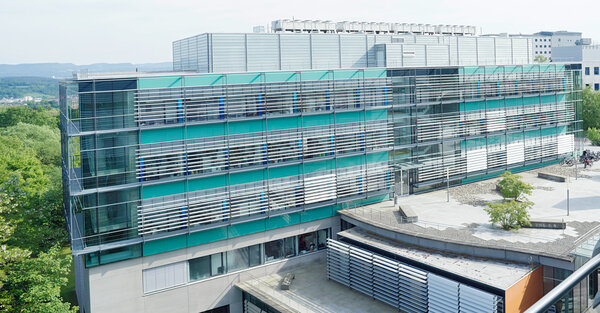
The platform was developed by Vasiliki Panagiotakopoulou, a senior postdoctoral researcher at the Hertie Institute for Clinical Brain Research, to address limitations of existing models, including the technical complexity, ethical considerations, and limited experimental flexibility associated with in vivo xenotransplantation approaches. By co-culturing human organoids with mouse brain slices, the researchers established a system that can be maintained and experimentally manipulated entirely in vitro.
Induced pluripotent stem cell (iPSC)-derived microglia introduced into the slice cultures migrated into the organoids and acquired morphological and functional features resembling those observed in vivo. In contrast to organoid-only cultures, where microglia typically survive only briefly, the chimeric system supported viable and responsive human microglia for extended periods, enabling long-term observation and live imaging.
"This platform has wide-ranging potential," commented Mathias Jucker, head of the department, "and allows exploration of disease-relevant processes." In proof-of-concept experiments, amyloid pathology was introduced into the chimeric cultures to examine genotype-dependent differences in microglial responses linked to an Alzheimer's disease risk variant.
Overall, the novel in vitro model provides experimental control over cellular composition and the surrounding microenvironment. It enables approaches that are difficult to achieve in vivo, including genetic "mix-and-match" strategies, pharmacological perturbations, and real-time functional imaging. While the model does not capture all aspects of the living brain, it offers an accessible platform that bridges the gap between simplified in vitro systems and complex animal models.
Original Publication: Panagiotakopoulou, Vasiliki, et al. "Chimeric human organoid and mouse brain slice co-cultures to study microglial function." Cell Reports Volume 44, Issue 12 (2025): 116656.
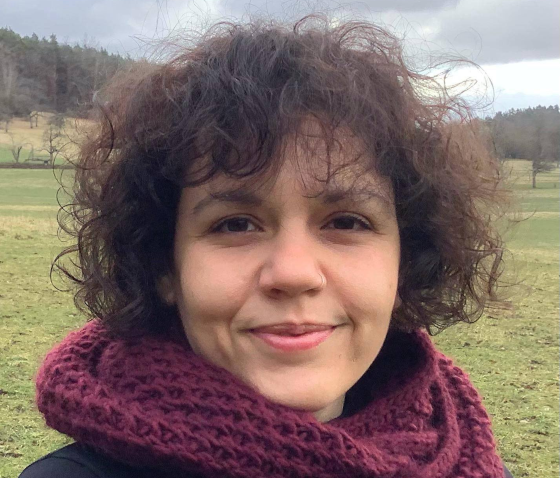
Photo: Dr. Vasiliki Panagiotakopoulou
Copyright: Dr. Vasiliki Panagiotakopoulou